Why Everyone Should Write

If you’re not writing, you don’t know what you’re missing.  Writing gives you a perspective you won’t get any other way.   Everyday thoughts and emotions swirl in your head and heart always barely eluding your grasp.  Then they fester and eventually surface at times and in ways you don’t want.  However, pouring your thoughts on paper (or screen as the case may be) tames them.

We store our memories and their attached emotions in the limbic area of the brain.  The limbic is not quite the subconscious because we are aware of it, but it is not as easily accessed as other parts of the brain.  The neo-cortex, or frontal lobe, is the power house for logic and ration.  When poor patterns of thinking trap us, it’s because we are dealing with our emotions and memories without getting logical perspective.  The physical act of writing (or typing) builds a bridge between the neo-cortex and the limbic system.  The result: you process your emotions logically instead of… well… emotionally.*

So even if you never publish a word, there is benefit in writing.  You will be more in touch with what you are feeling and why.  Being more connected with yourself makes you more settled and stable.  So, write!

(* The sources documenting how emotional memories of the limbic system function are many.  This is certainly not my original thought, but it is so well and widely documented that it can be considered common knowledge.)

Prompted Writings

What are Prompted Writings? See here

Prompt: That was his idea not mine

First draft:

“That was his idea, not mine,” Molly shouted.  Molly referred to her twin brother Mitchell.  Their older sister Emily who was on babysitter duty heard the commotion and came to investigate.  Upon entering the room, Emily found the two younger ones engaged in hot debate, and when she inquired as to what was going on, it prompted Molly’s declaration.
“What idea?  What are you talking about?”  Emily asked.
“Nuh-uh!!”  Mitchell protested.  “It was not!  And she was the one who flipped the latch on the cage.”  Emily glanced at Pippen’s cage in the corner.  Pippen was their twenty-five year old Macaw.  Their parents had gotten Pippen early in their marriage— long before they had any of the kids.  And since Macaws live to an average age of seventy-five, he was still relatively a youngster.  Upon Emily’s inspection, the cage door was indeed open.  But Pippen was nowhere in sight.
“So who opened the cage door?”  Emily’s voice was a mixture of calm investigator and annoyed older sister.
“She did!  She did!” Blurted Mitchell.
“But I’m not the one who opened the window,” Molly shouted.  Emily snapped her attention to the window that hung open.  She briskly walked to the window to inspect it.
“This window?  You opened this widow after Pippen got out of his cage?”  The panic in her voice was rising.
“Pippen said he wanted it open,” Mitchell defended his action.  And his voice warbled as he said it.  Emily snapped her attention back over to Molly.  Her eyes were welling up now and tears spilled down her cheeks.
“We called and called to him, but he didn’t come back,” Molly said between sobs.   
Dad had been working on the screens so they had been taken down.  There was nothing separating Pippen from the wild blue yonder, and he exploited his advantage and was somewhere in the neighborhood probably right now trying to talk to a very unsuspecting pigeon.

First revision:

“That was his idea, not mine,” Molly shouted referring to her twin brother Mitchell.  She was responding to their older sister Emily who was heard the commotion and came to investigate. 
“What idea?  What are you talking about?”  Emily asked.
“Nuh-uh!!”  Mitchell protested.  “It was not!  And she was the one who opened the cage.”  Emily glanced at Pippen’s cage in the corner.  Pippen was their twenty-five year old Macaw.  Their parents had gotten Pippen early in their marriage— long before they had any of the kids.  And since Macaws live to an average age of seventy-five, he was still relatively a youngster.  The door was indeed open.  But Pippen was nowhere in sight.
“So who opened the cage door?”  Emily’s voice was a mixture of calm investigator and annoyed older sister.
“She did!  She did!” Blurted Mitchell.
“But I’m not the one who opened the window,” Molly shouted. 
“This window?”  Panic welled in Emily’s voice.  “You opened this window after Pippen got out of his cage?”
“Pippen said he wanted it open,” Mitchell defended his action.  And his voice warbled as he said it.  Emily snapped her attention back over to Molly.  Her eyes were welling up now and tears spilled down her cheeks.
“We called and called to him, but he didn’t come back,” Molly said between sobs.   
Dad had been working on the screens so they had been taken down.  There was nothing separating Pippen from the wild blue yonder, and he exploited his advantage and was somewhere in the neighborhood probably right now trying to talk to a very unsuspecting pigeon.

Prompted Writings

What are Prompted Writings? See here

Prompt: with great joy, I share with you what happened after…

(First Draft)

With great joy, I share with you what happened after I opened the letter.  Well, first, I suppose I should tell you about the letter.  I received a letter in the mail today.  The plain, white, letter sized envelope didn’t look out of the ordinary.  The edges were a bit worn from the processing and handling, but other than that it was ordinary.  But when I opened it, I saw nothing inside.  I pulled the flap back and opened the mouth of it wide to see if perhaps a small piece of paper stuck to the inside.  I turned it upside down.  I tore the envelope open to see if anything was written on the inside.  Nothing.  Strange.

That’s when I looked at the front again, and noticed the return address.  It was from Steven Elrod.  That went all the way back to grade school.  Sixth grade to be exact.  Half way through the year, a new student moved into our class.  It was a small school and an even smaller class.  So a new student was not common.  But then he also left as mysteriously as he came a few weeks later.  Ask me now why I even remember him and I couldn’t.  I had maybe a handful of conversations with him, never did anything with him outside of class, and I certainly hadn’t kept up with him in the last forty years.  So why was I now getting a letter from him— or more precisely, an envelope.  Then I noticed the return address.  China? 

(First Revision)

Opening that letter ignited a chain of events that still has my head swimming.  Well, first, I suppose I should tell you about the letter.  I received a letter today.  The envelope didn’t look out of the ordinary.  The edges were a bit worn from the processing and handling but nothing other than that.  The strange thing— it was empty.  I felt inside.  Nothing.  I turned it upside down.  Nothing. I tore it completely open and smoothed it flat on the desk to see if anything was written on the inside.  Nothing.  Strange.

That’s when I looked at the front again and noticed the return address.  It was from Steven Elrod.  That time-morphed me all the way back to grade school.  Sixth grade to be exact.  Half way through the year, a new student appeared in class.  It was a small school and an even smaller class.  So a new student was not common.  And then, a few weeks later, he left as mysteriously as he came.  Ask me now why I even remember him and I couldn’t tell you.  I had maybe a handful of conversations with him, never did anything with him outside of class, and I certainly hadn’t kept up with him in the last forty years.  So why was I now getting a letter from him— or more precisely, an envelope.  Then I noticed the return address.  China? 

Tips

“[On Writing Well] is full of what might be called tips. But that’s not the point of the book. It’s a book about craft principles that add up to what it means to be a writer…Tips can make someone a better writer but not necessarily a good writer.”

From On Writing Well by William Zinsser, p.48

In his book, On Writing Well, Zinsser responds to a teacher who asked him to give tips for writing to his English class.  He tells the teacher he doesn’t do tips.  The quote above explains why.  It comes down to developing the craft of writing.

The thought of developing within me the craft of writing stirs my soul.  A current ripples within me when I contemplate the endeavor of taking a blank sheet and flooding words across it and then channelling the churning waters so that structure and style begin to form and the passion in me flows out and sweeps my readers away.  That is a good writer.  That is an author who is on fire for his craft.  That is who I am striving to be.

I Hate Long Blog Posts

I hate long blog posts.  Even though I was born long before the day of social media, I am certainly affected by the microwave generation.  What do I mean?  We can put instant noodles in the microwave that will be ready in thirty seconds and still say hurry up.  I admit it.  I am impatient.  And this mindset certainly bleeds into my taste for blogs.  If I see an entire page of text, I am likely to go right past it.  If it’s worth being said, it can probably be summed up in about two hundred-fifty words. 

There are some notable exceptions.  Sometimes, the subject matter must be more adequately developed.  But most of the time, a writer sits down without doing any prep work.  No thought put into writing.  Work it all out on the page or screen and subject the reader to the process.  When I buy a car, I don’t want to have to walk along the assembly line.  I just want the finished product.  If I am writing a short story or a work of prose, that is a totally different story, but with a blog post, I, as the consumer, want something pithy and well conceived so it gives me one kernel of thought provoking goodness.  I don’t really need to go through all of the author’s mental wanderings.  That’s why I hate long blog posts.

Content Management

“Content management.  Isn’t that what we used to call ‘writing’?  I’ve been in the content-management business all my life.  I look for content that interests or amuses me, and then I manage it into a narrative.  It’s what all writers do if they want to keep paying the bills.  Dickens did it very well.  So does every good crime writer: Arthur Conan Doyle, Agatha Christie, Raymond Chandler.” (From The Writer Who Stayed, William Zinsser, page 4)

I love simplicity.  I live by the cliché, “less is more.”  Let me illustrate.  I could tell you: “Create tension in the muscular fibers of your bicep to create a medial flexion while simultaneously initiating extension of the proximal digit of the extremity.  Time and gauge the distance to trip the circuit to cut the flow of alternating current so the incandescent filament stops emanating photons.”  Or, I could say “flip the switch to turn off the light.”  Too often, we make writing far more difficult than it needs be.  When Zinsser refers to writing as “content management” he gives me a simple plan.

Where do I see a plan in that statement?  Change it to an imperative.  Manage content.  Now I know what to do.  When I begin writing, no matter what the genre, I begin with a batch of content.  If it’s prose, I have facts and arguments.  If it’s fiction, I have characters and a story arc.  Either way I have a collection of content.  So now I need to manage that content.  I must organize it.  Refine it.  Make it do what I want it to do.  Looking at my writing as content management makes it simple for me.

You are a Writer

You are probably a writer and you don’t even know it.  Most of the time when we think of someone being a writer, we think of hard bound books and glossy dust covers with intriguing author poses.  Or possibly it’s the journalist stabbing at the keyboard rushing to meet a deadline.  Most of us will never be those people.  But I still say, you are probably a writer and don’t even know it.

Are you responsible for sending out the emails for your working group?  Do you prepare a weekly Sunday school lesson?  Do you contribute to a newsletter for your hobby group?  Do you sit down regularly to pen notes of encouragement to your friends and family?  If you fall into any of the above categories—  or any like them— you, my friend, are a writer.  No, you are more than a writer.  You are a fellow journeyman upholding the prestige of this ancient craft.  So, perfect your craft.

I have scoured many writing websites.  So far all the ones I have seen are devoted to that individual who strives for the best seller list.  But if that is not your end game, you are no less of a writer.  And you need a website that can help you perfect your craft.  I intend to bring that to you.  So stop back on a regular basis to get some help in perfecting your craft.

My Site is Under Construction!!!

Hey! Thanks for visiting my page. I am currently building it. I will officially release it toward the end of summer 2021 so please keep checking back. Actually, go ahead and subscribe so you can see the progress!! (ya know…you can always unsubscribe later…wink, wink!!!)

I will focus on three main themes:
~ general writing for the everyday writer (that’s probably YOU!!!)
~ faith based reflections (aka devotional thoughts)
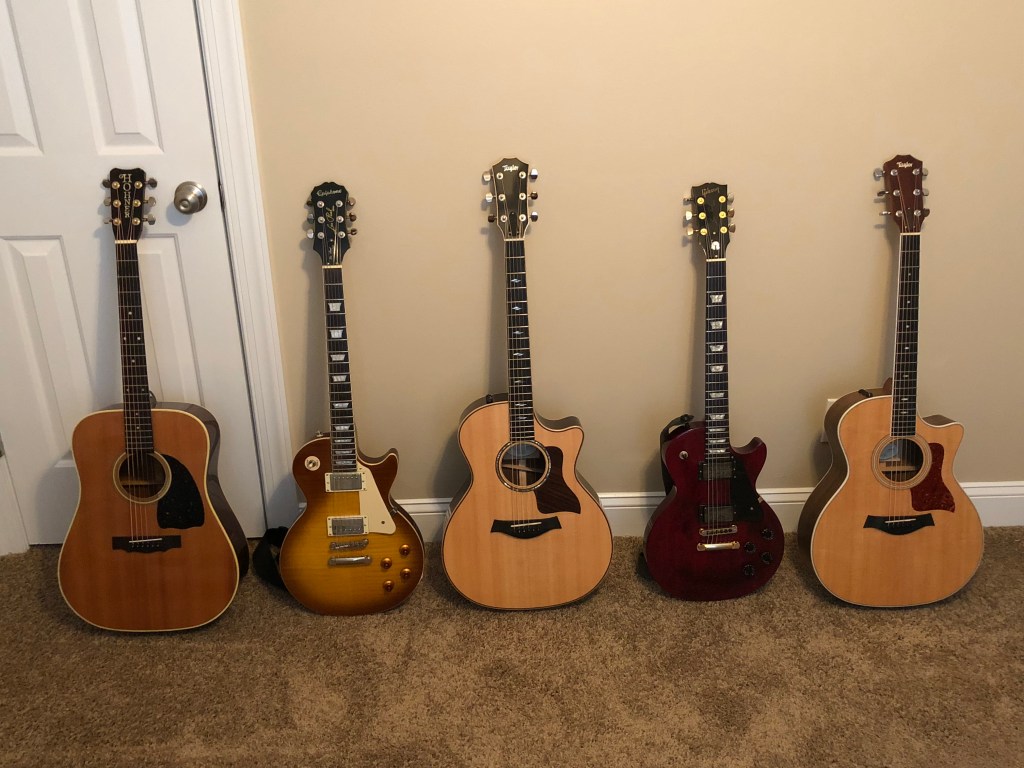
~ and guitar…becasue, well…GUITAR!!

My Site is Under Construction!!!

Hey! Thanks for visiting my page. I am currently building it. I will officially release it toward the end of summer 2021 so please keep checking back. Actually, go ahead and subscribe so you can see the progress!! (ya know…you can always unsubscribe later…wink, wink!!!)

I will focus on three main themes:
~ general writing for the everyday writer (that’s probably YOU!!!)
~ faith based reflections (aka devotional thoughts)
~ and guitar…becasue, well…GUITAR!!