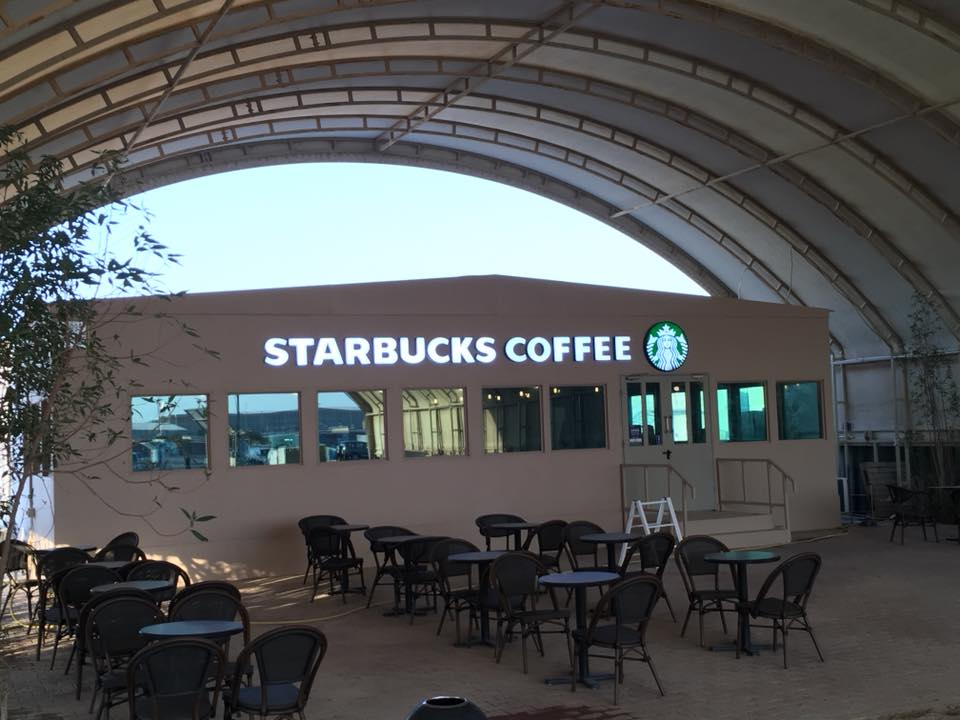
The gravel crunches under my combat boots. Laptop tucked under my arm. Walking under the arched canopy (in the Army we call them sun-shades), I pass tables and chairs in a Paris-sidewalk-café-esque arrangement. Hints of cigar smoke hang in the air and dove waddle around looking for bits of croissants that have fallen. My boots clunk on the metal steps and the hinges groan as I tug on the door.
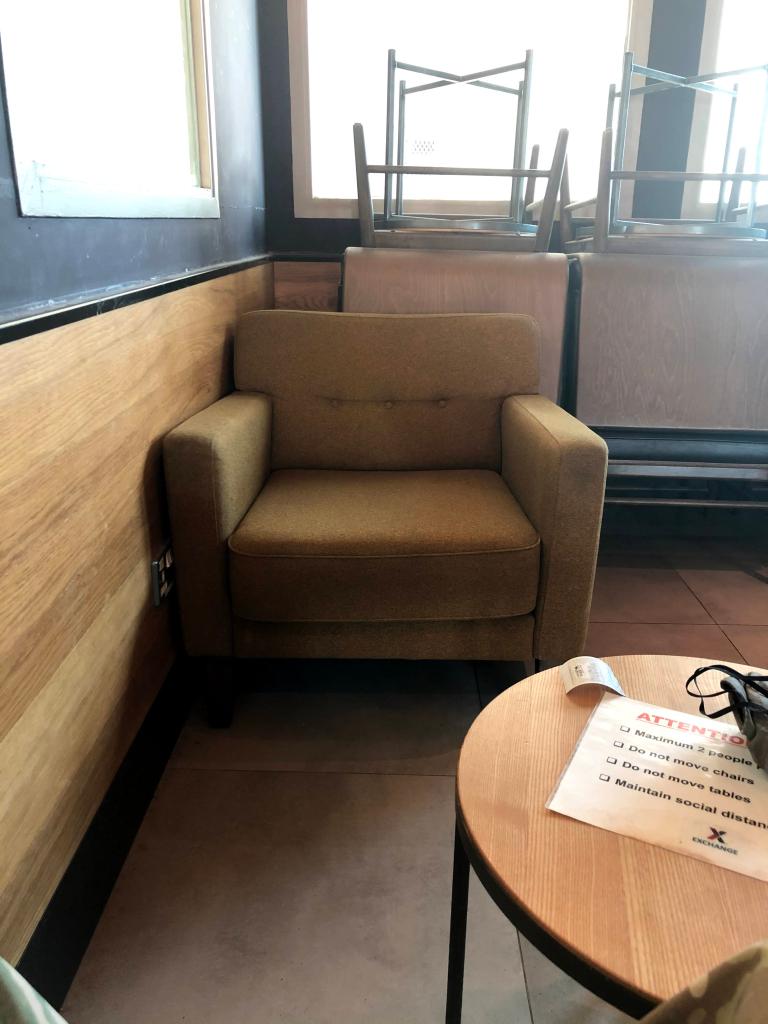
My eyes adjust to the dimly lit interior. Layers of grime on the armrests of the chairs reveal the years of soldiers, contractors and government civilians who have taken refuge in this place. The smell inside is pungent and stale at the same time— a mixture of expended coffee grounds, brewing espresso and mold and mildew lurking in the dark corners.
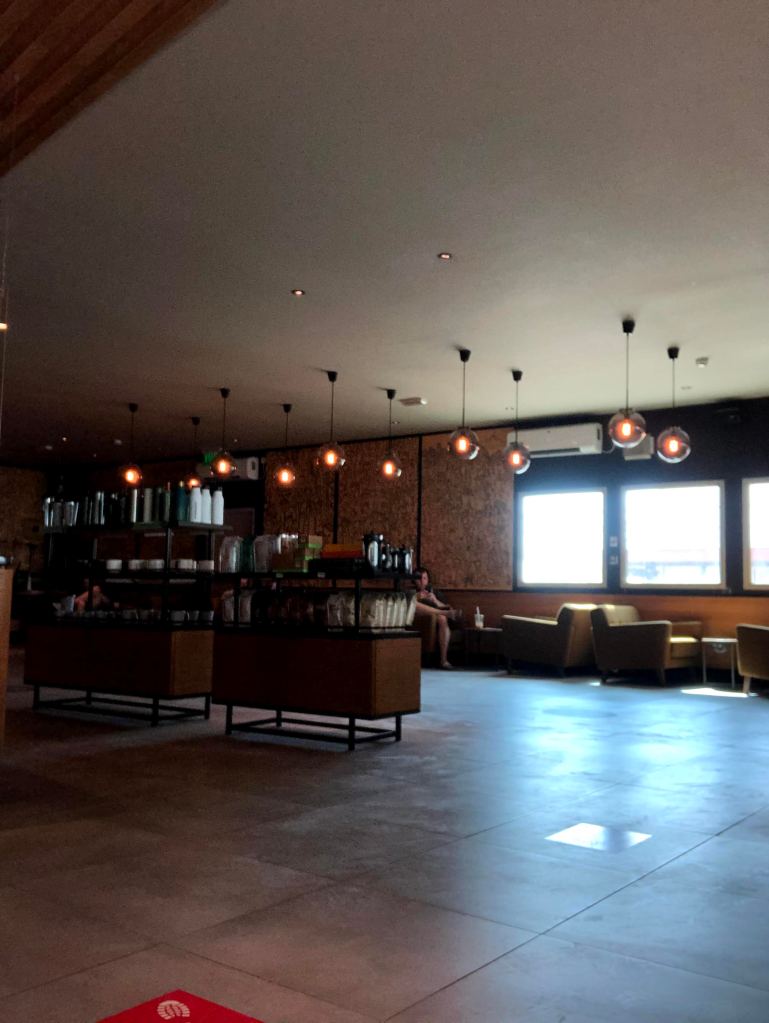
I get my grande Pike Place and settle into one of the chairs where thousands have sat as they have sought a little bit of respite. Separated from family and civilization. Being held to a ridiculous expectation of work output. Dealing with crises at home. Some are getting ready to go into combat in a few hours or days. Some supporting the ones in the fight. Some will not come back. I am right now sitting in a chair where someone wrote the last email they would ever write to their loved ones.
But still, this place is a refuge. It is a reminder of a normal life. A life that is not filled with early mornings and late nights. With long training days and deployments to far away places. Of a time when good-bye will no longer be said. If this Starbucks sat in the States, it would be condemned and closed down. Here, on Camp Arifjan, it is an oasis. And one of my favorite places. I’ve spent two years in total on this installation. Hopefully, I will spend no more time here. But if I do, I know my grime covered chair will be waiting for me to sustain me until I go home again.
 Ken May